
What Is the Best Age to Start Piano Lessons?
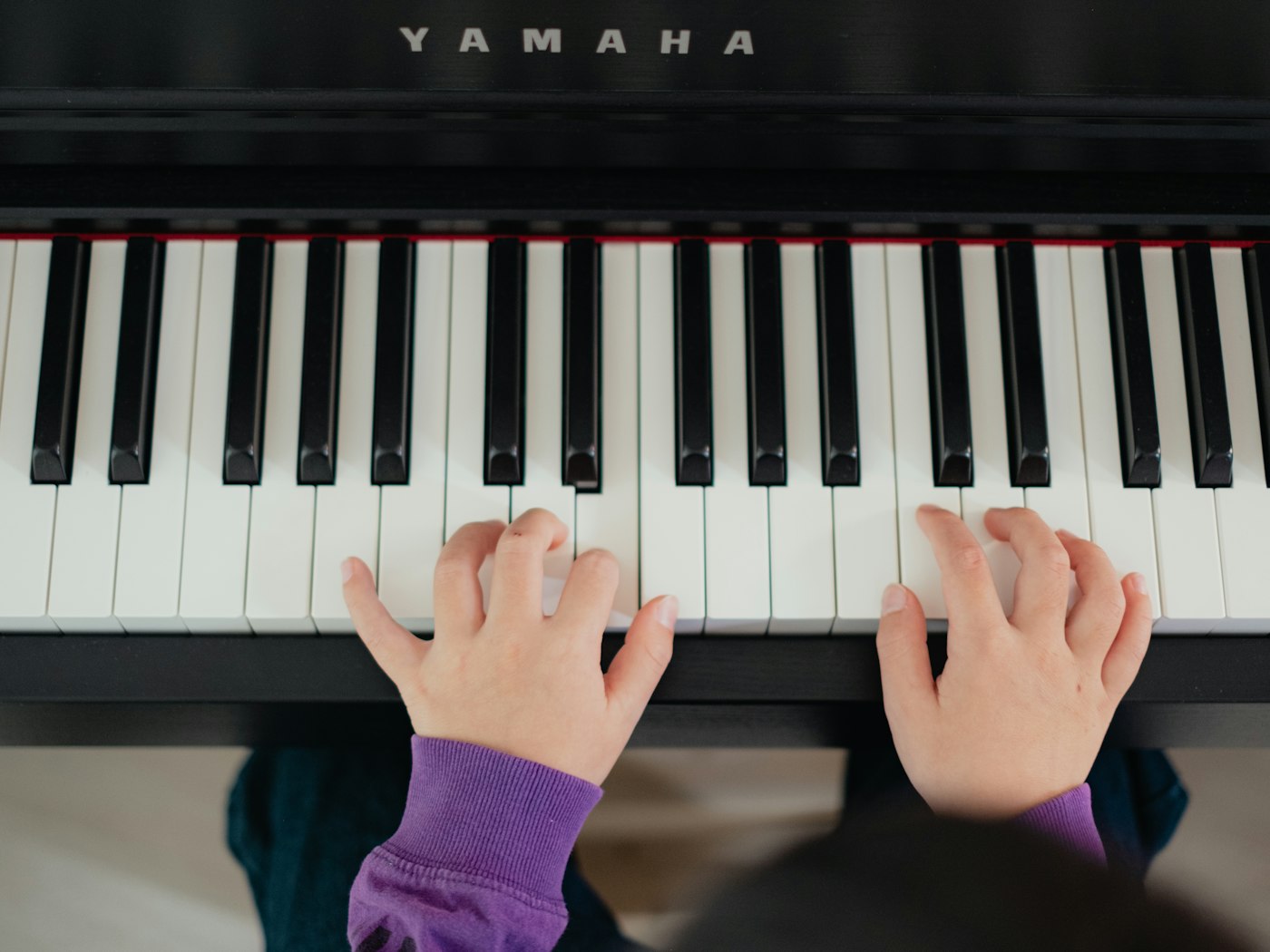
It is one of the first questions parents ask us: when should my child start piano? The honest answer is that there is no single perfect age. Most piano teachers place the ideal window for formal lessons somewhere between six and nine, but a child's musical life can begin much earlier, and an adult's can begin at any time.
What matters most is not the number on the birthday cake. It is whether the format of the lesson matches where your child is in their development.
Before Age 6: Music First, Piano Technique Later
Children can feel a steady beat, sing in tune and react to music long before they can sit still at a keyboard for half an hour. At three, four or five years old, the most useful thing is not a private lesson but a joyful group class built around listening, singing, rhythm, movement and the discovery of instruments.
At this age, learning happens through play. A child who claps rhythms, sings with friends and recognizes high and low sounds is building exactly the foundations that make piano easier later on: a good ear, a sense of pulse and, above all, a love of music.
That is the idea behind our Soon to Sound program for ages 3 to 5: a weekly one-hour group class where children explore music through storytelling, games and imagination, then gently discover rhythm, note reading and ear training.
Ages 6 to 9: The Classic Starting Window
Around six, several things usually come together. Children begin to read, their fingers become more independent and they can focus on a task for longer. This is why so many teachers recommend starting formal piano lessons between six and nine.
At this stage, a combination works best: a private lesson to build technique and repertoire, and a group class to learn music theory, ear training and musical culture with other children. Our Made to Play program for ages 6 to 12 is built exactly this way.
Signs Your Child Is Ready
Age is only one part of readiness. Look for these signs:
- Curiosity: your child goes to the piano on their own, hums melodies or asks to play.
- Focus: they can concentrate on one activity for 15 to 20 minutes.
- Fine motor skills: they can move fingers separately, for example to count on their fingers.
- Letters and numbers: recognizing the alphabet and counting to ten helps with note names and fingering.
- Patience with small steps: they can enjoy practicing something a few times to get it right.
If several of these are missing, it does not mean music has to wait. It simply means a playful group format is a better first step than a private lesson.
Starting Later: 10, 15 or 40
Starting at ten or twelve is not "late". Older children often progress quickly because they read fluently, understand instructions and can practice independently. Teenagers and adults bring motivation, analytical skills and clear goals.
Our Never Too Late program welcomes complete beginners as well as pianists returning to the instrument after years away. As we often say, it really never is too late.
How to Choose the Right First Step
- Ages 3 to 5: a group music class focused on listening, rhythm, singing and play.
- Ages 6 to 12: private piano lessons combined with group classes for theory and ear training.
- Teens and adults: flexible private lessons built around personal goals and favorite music.
Whatever the age, the best start is one that leaves a child (or an adult) wanting to come back next week.
Come and Visit
Not sure which program fits your child? The easiest way to find out is to come and see. We recommend a discovery visit before enrolling, so we can meet your child and suggest the right program. Book a discovery visit at our Upper East Side townhouse.
Contact Us
Address: 170 East 80th Street, New York, NY 10075
Website: www.lamaisonschoolofmusic.com
Email: info@lamaisonschoolofmusic.com
Instagram: @lamaisonschoolofmusic